|
Listen to this article
Getting your Trinity Audio player ready...
|
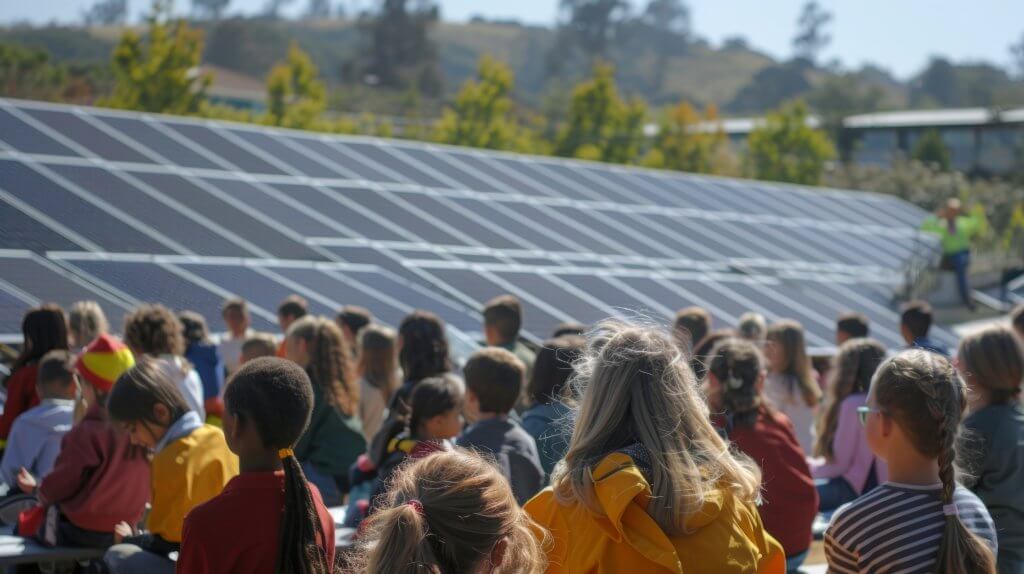
As climate change increasingly impacts our world, educators must urgently prepare the younger generation for this critical issue. Organizations and educational institutions globally strive to address the climate crisis through school curriculums. This integration goes beyond imparting knowledge. It cultivates a generation with skills and resilience to tackle climate challenges.
Climate education plays a pivotal role in this endeavor by fostering awareness, critical thinking, and proactive behaviors among students. The primary objective of integrating climate education into school curriculums is to ensure that every student and teacher gains essential knowledge on climate change and sustainability. This approach goes beyond merely understanding the science; it encompasses recognizing the social, economic, and environmental impacts of climate change. By embedding these concepts across all educational levels, we can cultivate a generation of environmentally conscious individuals prepared to contribute to sustainable development and climate resilience.
Building Climate-Smart Foundations
Climate literacy should evolve continuously throughout a student’s education:
- Early Childhood and Primary Education: Young minds need to connect with nature early. Through observing, listening, planting, and exploring, children can develop a connection to nature. This stage instills a love for the environment and shows that actions have consequences. Simple activities like planting trees, recycling projects, and water cycle lessons introduce these concepts.
- Secondary Education: As students advance, the curriculum should delve deeper into the scientific principles behind climate change. This includes understanding greenhouse gasses, the carbon cycle, and the human impact on the environment. By exploring case studies on industrial pollution, deforestation, and the effects of climate change on ecosystems, students can grasp the complexity of these issues. Projects that encourage critical thinking, such as creating sustainable school environments or conducting energy audits, provide practical applications of these concepts.
- Upper Secondary and Higher Education: At this level, ethical questions and real-world applications of climate knowledge are challenging excerises for students. This could involve developing climate action plans, participating in citizen science projects, or engaging in debates on climate policies. By linking academic content with current events and societal challenges, students can explore the broader implications of climate change on both local and global scales.
Learning Through Action 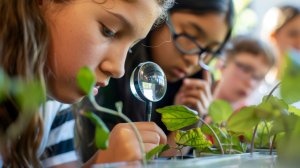

School gardens can serve as effective climate classrooms where students discover biodiversity while growing their own food. They learn sustainable agriculture through direct experience. Similarly, conducting energy audits of school buildings helps students identify opportunities for reducing energy consumption and promoting efficiency. This fosters a practical understanding of energy conservation and can lead to real changes in school operations. Students and communities can develop and implement climate action plans, which address climate change by proposing measures to reduce emissions and enhance resilience. Through citizen science projects, students monitor local air and water quality. They contribute to real climate research through data collection and analysis. These activities not only enhance students’ environmental awareness but also empower them to make meaningful contributions to sustainability efforts.
Making It Happen: A Community Effort
Effective climate education cannot be achieved in isolation. It requires collaboration between various stakeholders, including government agencies, curriculum developers, educators, and the broader community. Expert educators can create focused modules on climate science, impacts, and solutions to set the pace for curriculum development. Meanwhile, government actors must advocate for policies that mandate climate education. Securing funding and resources to support the development and implementation of climate education happens with resource allocation of schools.
Teacher training is a crucial component of this process. Providing training on climate issues ensures that educators are well-prepared to teach this important and evolving subject. Furthermore, workshops, seminars, and online courses on climate science, pedagogy, and classroom strategies can help teachers in their professional development in climate education.
It is also integral to establish a network and community of practice, where teachers can share resources, experiences, and best practices. Including schools from diverse regions and backgrounds creates strong teacher networks with varied perspectives.
The Ripple Effect
Ultimately, the integration of climate education into school curriculums has far-reaching implications. Climate education transforms students, teachers, communities, and society. Comprehensive climate education empowers students to make informed decisions and take meaningful actions to reduce their carbon footprint and promote sustainability. They develop critical thinking and problem-solving skills, which are essential for addressing the complex challenges posed by climate change.
For educators, teaching climate change provides an opportunity to inspire the next generation of environmental leaders. It encourages a shift in teaching practices towards more interdisciplinary, project-based learning, which not only enhances student engagement but also fosters a deeper understanding of the subject matter. Communities benefit from the ripple effects of climate education as students bring their knowledge and awareness home, influencing family and community practices. This can lead to broader societal changes, as more people become conscious of the importance of sustainability and are motivated to take action.
Though, the challenges ahead are significant, with a collective effort, the next generation can lead the way in promoting sustainability and environmental stewardship. We can build a global climate literacy through collaboration, resources, and advocacy for policy changes.
To learn more about the intersection of climate change and education, we invite you to read about our Analytical Framework and view our Climate Change and Education Dashboard.
Information on climate justice and equity is explored in the first blog post in this series, Warming World, Widening Gaps: Understanding Climate Justice and Equity. Further details on the specific challenges of vulnerable groups are explored in the second blog post in this series, Unequal Earth: A Deeper Look at Climate Change and Social Vulnerability. The impacts of climate-induced migration on education are illustrated in A Growing Crisis for Global Learning: Climate Migration and Education.
Dania Zanaid and Jerusha Rainy Kannula from the UCLA Luskin School of Public Affairs contributed to this blog post.