
Agroforestry: Enhancing Cocoa Farming and Climate Resilience in Indonesia

Country

Indonesia

Region

Asia Pacific

Type

Infographic

Year

2024

Agroforestry: Enhancing Cocoa Farming and Climate Resilience in Indonesia

Country

Indonesia

Region

Asia Pacific

Type

Infographic

Year

2024

Abstract:

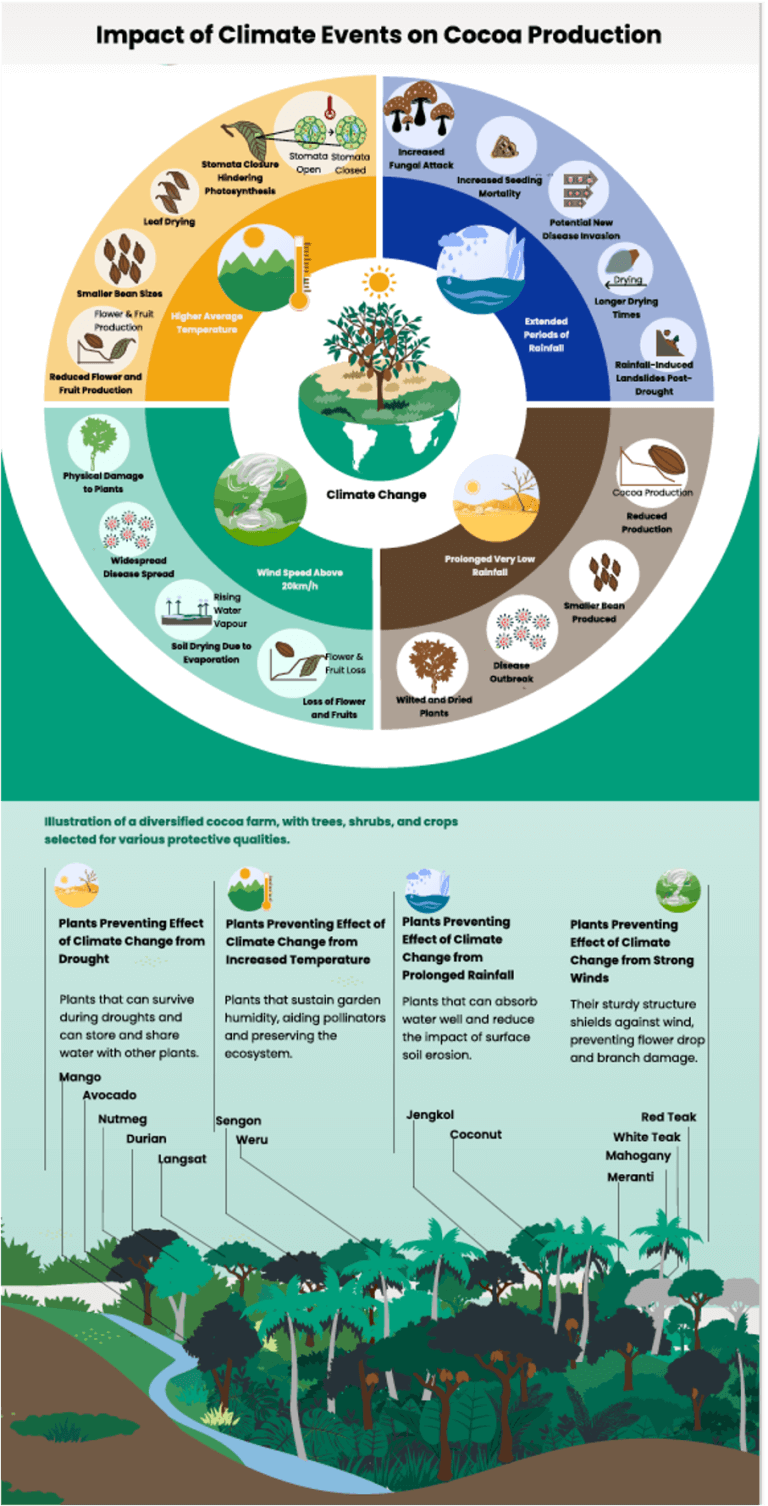
Indonesia is one of the world’s leading cocoa producers, yet the sector faces significant challenges due to climate change, including altered precipitation patterns, rising temperatures, and extreme weather events. This infographic delves into how agroforestry, a creative agricultural approach that integrates trees into cocoa farming landscapes, offers a sustainable solution to these challenges. Climate-smart Diversified Cocoa Agroforestry (DCA) practices not only enhance soil health and reduce erosion but also boost crop productivity by creating a more biodiverse and resilient ecosystem. The infographic highlights the specific effects of climate events on cocoa production, such as increased fungal attacks and prolonged droughts, and showcases how agroforestry can mitigate these impacts.

Description:

The “Agroforestry: Enhancing Cocoa Farming and Climate Resilience in Indonesia” infographic presents a comprehensive overview of the role of diversified cocoa agroforestry in addressing climate change and improving agricultural productivity in Indonesia. This infographic highlights the significant benefits of agroforestry practices, which combine cocoa farming with other crops to enhance biodiversity, increase farmer income, and mitigate climate-related risks. By showcasing the impact of climate events on cocoa production, the infographic underscores the importance of sustainable land management strategies to ensure long-term agricultural sustainability and resilience. The infographic also details the objectives and outcomes of the ACTIVE (Advancing Cocoa Agroforestry Toward Income, Value, and Environment) project, which aims to train thousands of cocoa farmers in South Sulawesi and Southeast Sulawesi, leading to improved yields, enhanced livelihoods, and significant reductions in greenhouse gas emissions.

Related publications

Development Disrupted: Reassessing the Implications of USAID’s Restructuring Amid Global Aid Realignment

This infographic analyzes the consequences of USAID’s 2023–2024 restructuring, which led to the termination of 5,341 projects and the defunding of 2,353 implementing partners, many of whom lost 100% of their USAID support. Over 55% of recipient countries lost all funding. The analysis extends beyond the U.S. to consider concurrent budget contractions by other donor countries, indicating a systemic shift in how foreign aid is prioritized and delivered. The infographic visualizes these changes, offering insights into the scale, distribution, and potential implications of a more constrained and transactional development aid environment.
The Future of U.S. Foreign Assistance: Unlocking U.S. Business Investment

This article examines the Trump administration’s proposed restructuring of U.S. foreign assistance, which seeks to streamline agencies and align aid with investment-driven growth. The plan introduces promising steps to improve efficiency and expand opportunities for U.S. businesses abroad. However, the transition also brings important considerations, such as ensuring continued access to technical expertise, maintaining regional flexibility, and supporting financing tools that encourage investment in higher-risk markets. The piece outlines ways to maximize the benefits of these reforms while addressing potential challenges to ensure the new structure drives sustainable growth and impact.

Subscribe

Enter your mail below to receive updates from Institute for Development Impact

Wishing you a peaceful holiday season
and a prosperous New Year 2026.