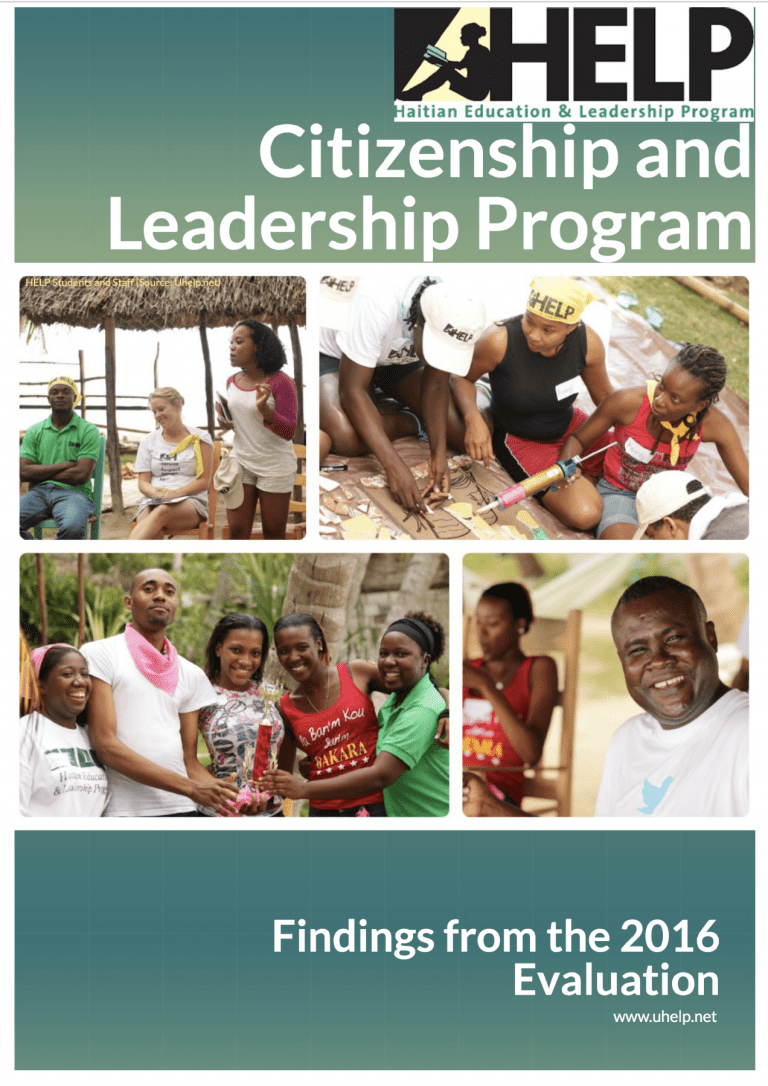
Independent Evaluation for the Haitian Education and Leadership Program
Haiti
Latin America and Caribbean
Evaluation Report
2016
Haiti
Latin America and Caribbean
Evaluation Report
2016
The evaluation conducted by I4DI found that the Citizenship and Leadership (C&L) Program was particularly relevant to the Haitian context, where there were very few opportunities for youth to participate in civics and leadership training (inside or outside of the classroom), and where leadership was often identified with political controversy.
The evaluation found the C&L Program to be very effective. Data collection strongly affirmed that program content led to a real transformation in students to become active citizens committed to change within themselves, their community, and their country. Additionally, the program was relevant in its content because it modeled key best practices identified through literature review, and offered opportunities for real world application and reflection through service-learning, a strategy that incorporated community service with educational objectives.
This infographic analyzes the consequences of USAID’s 2023–2024 restructuring, which led to the termination of 5,341 projects and the defunding of 2,353 implementing partners, many of whom lost 100% of their USAID support. Over 55% of recipient countries lost all funding. The analysis extends beyond the U.S. to consider concurrent budget contractions by other donor countries, indicating a systemic shift in how foreign aid is prioritized and delivered. The infographic visualizes these changes, offering insights into the scale, distribution, and potential implications of a more constrained and transactional development aid environment.
This article examines the Trump administration’s proposed restructuring of U.S. foreign assistance, which seeks to streamline agencies and align aid with investment-driven growth. The plan introduces promising steps to improve efficiency and expand opportunities for U.S. businesses abroad. However, the transition also brings important considerations, such as ensuring continued access to technical expertise, maintaining regional flexibility, and supporting financing tools that encourage investment in higher-risk markets. The piece outlines ways to maximize the benefits of these reforms while addressing potential challenges to ensure the new structure drives sustainable growth and impact.