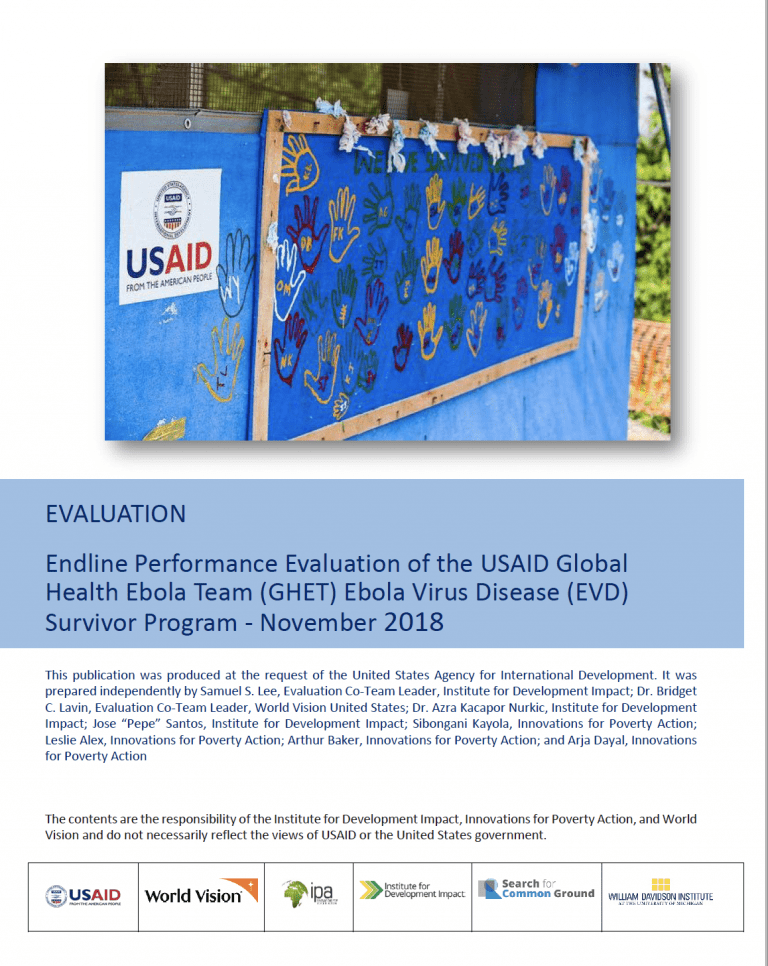
Endline Performance Evaluation of the USAID Global Health Ebola Team (GHET) Ebola Virus Disease Survivor Program
Sierra Leone, Guinea, Liberia
West Africa
Evaluation Report
2018
Sierra Leone, Guinea, Liberia
West Africa
Evaluation Report
2018
I4DI designed and implemented a final evaluation of USAID Global Health Ebola Team’s (GHET’s) Ebola Survivor activities in Guinea, Liberia, and Sierra Leone. Using a mixed-methods approach, the evaluation team drew on quantitative health facility assessments, quantitative provider surveys, qualitative key informant interviews at endline, and use of baseline and endline quantitative surveys conducted among Ebola Virus Disease (EVD) survivors by implementing partners. The GHET program was effective, particularly in reducing the stigma EVD survivors experienced from health providers in Guinea and Liberia. In Sierra Leone, provider stigma was already the lowest among countries at baseline and remained so at endline; thus, the same reduction was not evident. While the GHET EVD survivor program also improved the availability of clinical services for EVD survivors, accessibility of care was more difficult to improve at the primary level given systemic public health weaknesses in Guinea, Liberia, and Sierra Leone.
This infographic analyzes the consequences of USAID’s 2023–2024 restructuring, which led to the termination of 5,341 projects and the defunding of 2,353 implementing partners, many of whom lost 100% of their USAID support. Over 55% of recipient countries lost all funding. The analysis extends beyond the U.S. to consider concurrent budget contractions by other donor countries, indicating a systemic shift in how foreign aid is prioritized and delivered. The infographic visualizes these changes, offering insights into the scale, distribution, and potential implications of a more constrained and transactional development aid environment.