Citizens of Bosnia and Herzegovina Agree More on How Institutions Should Work Than Politics Suggests, UN Roundtable Hears
Research from the University of Luxembourg, Yale University and the Institute for Development Impact, presented at United Nations Headquarters, documents broad cross-community support for independent courts, merit-based administration and equal rights, and identifies where cooperation across divisions stalls before it becomes institutional action.
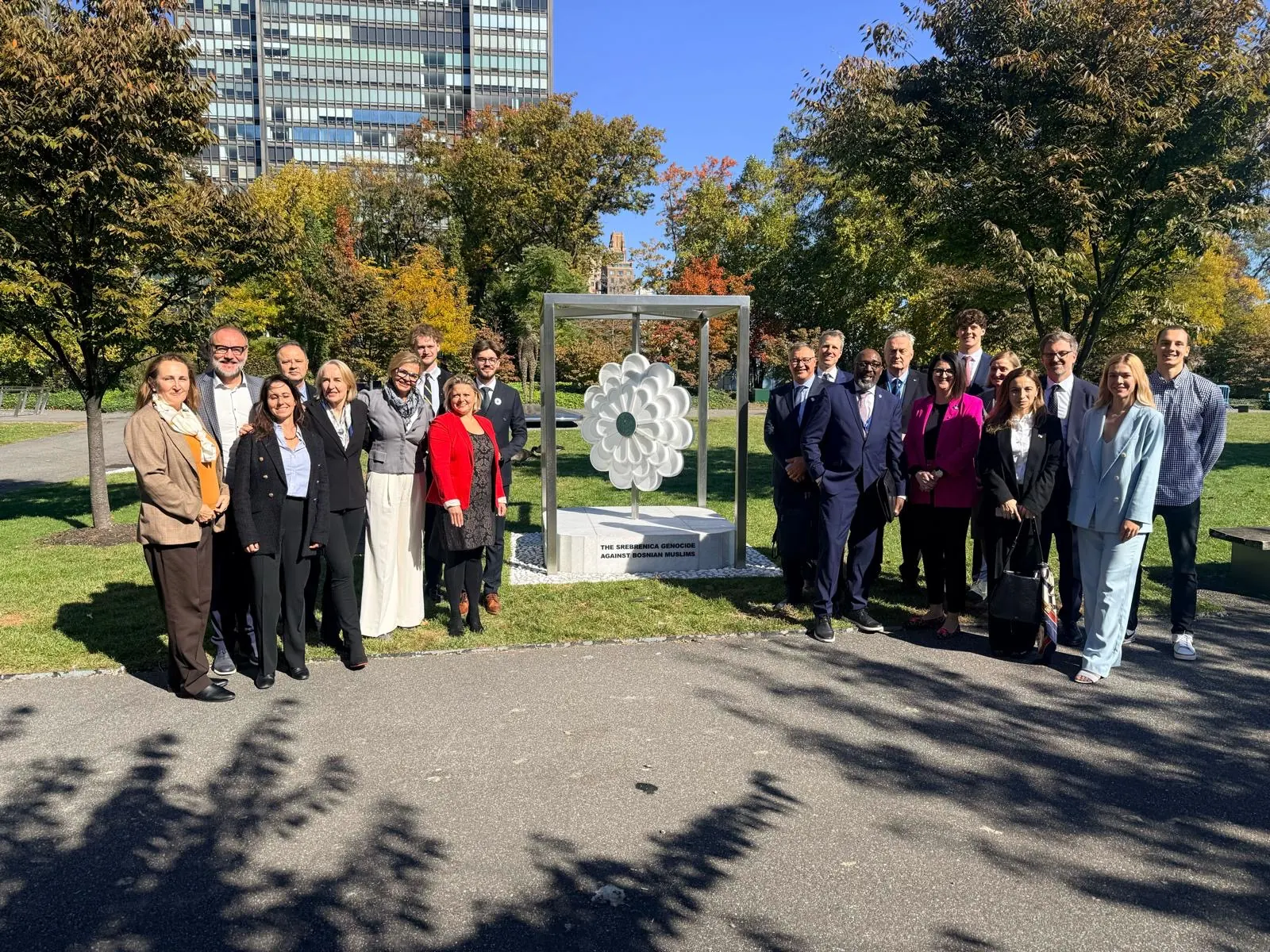
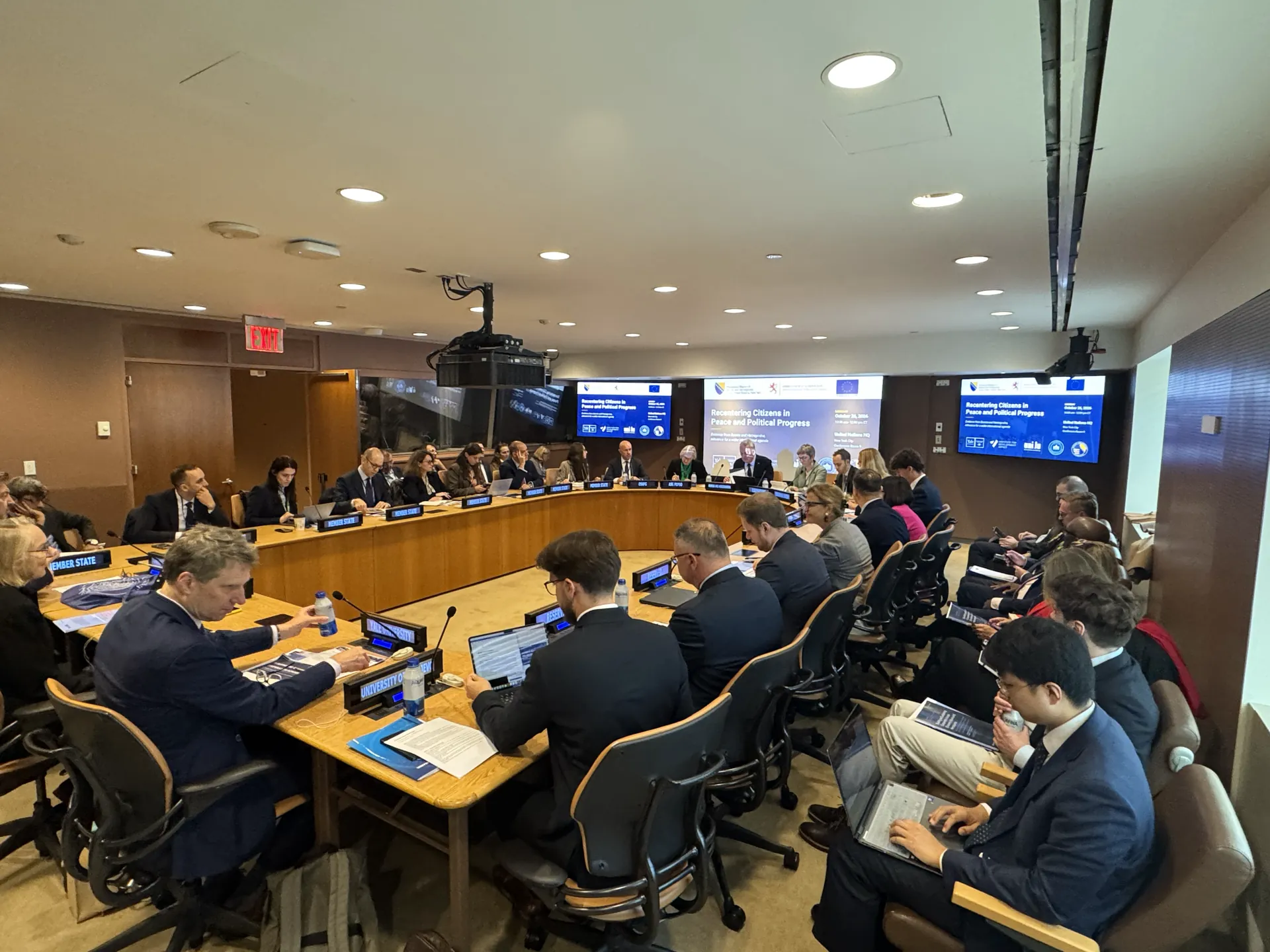
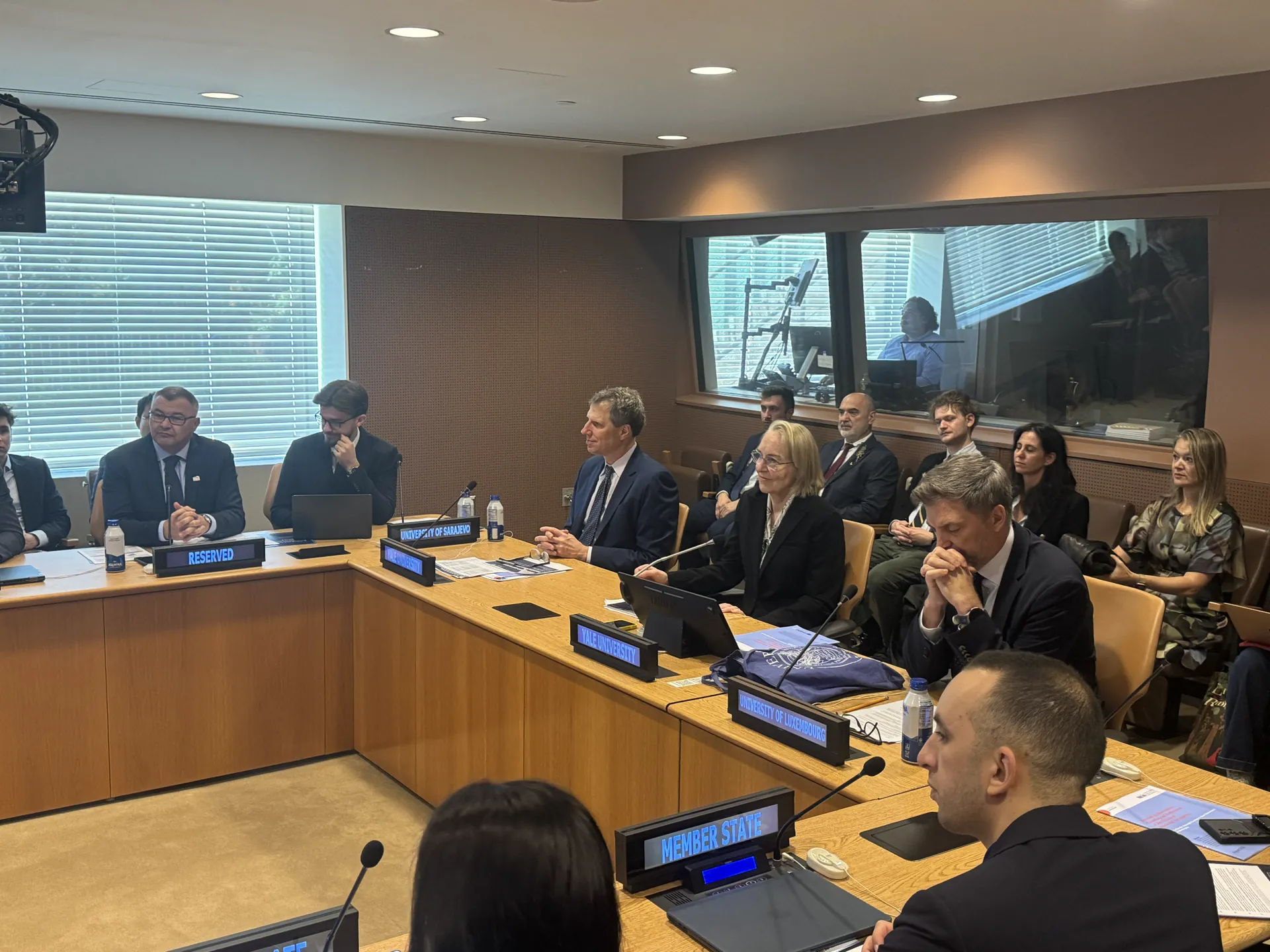
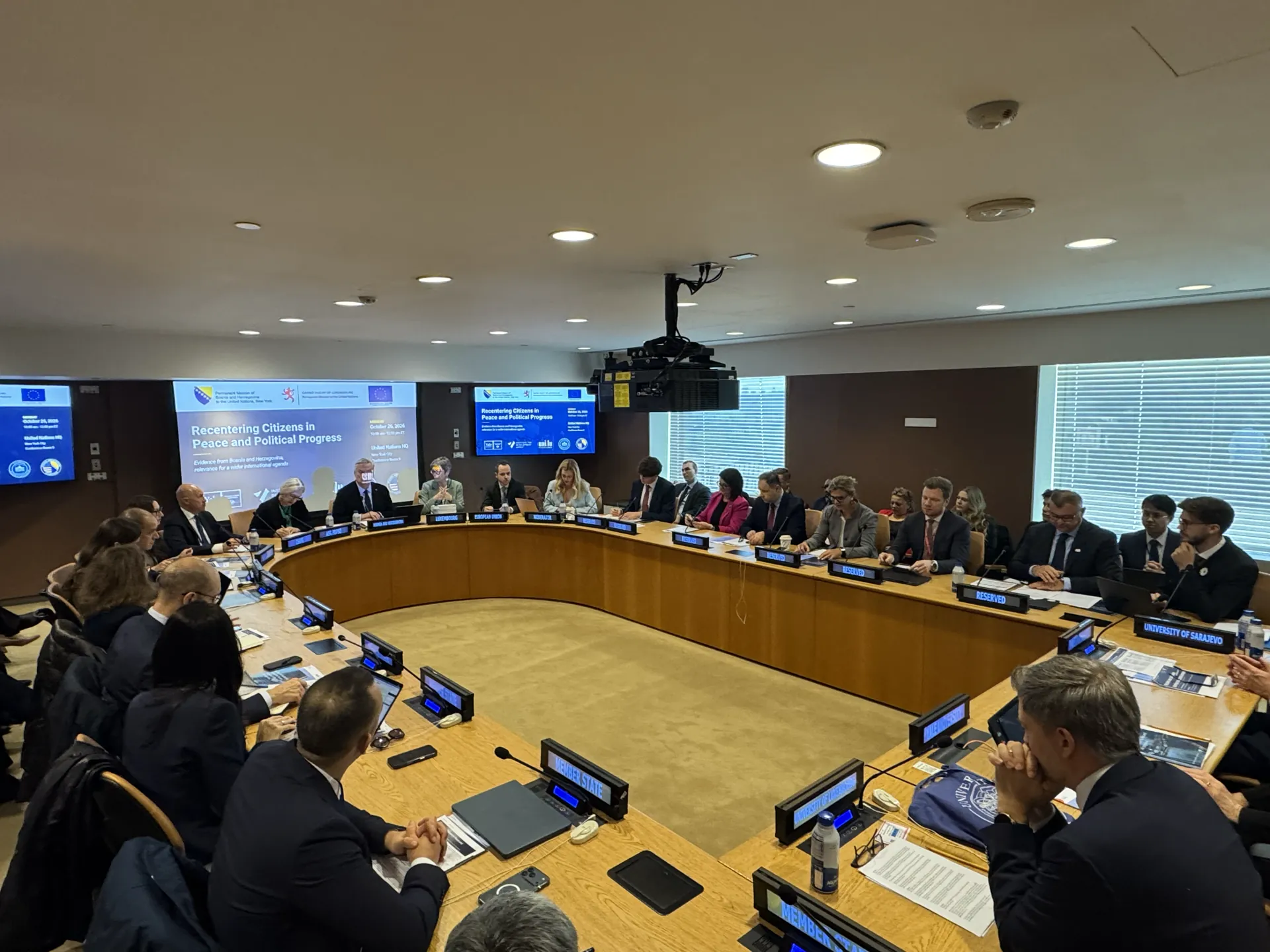
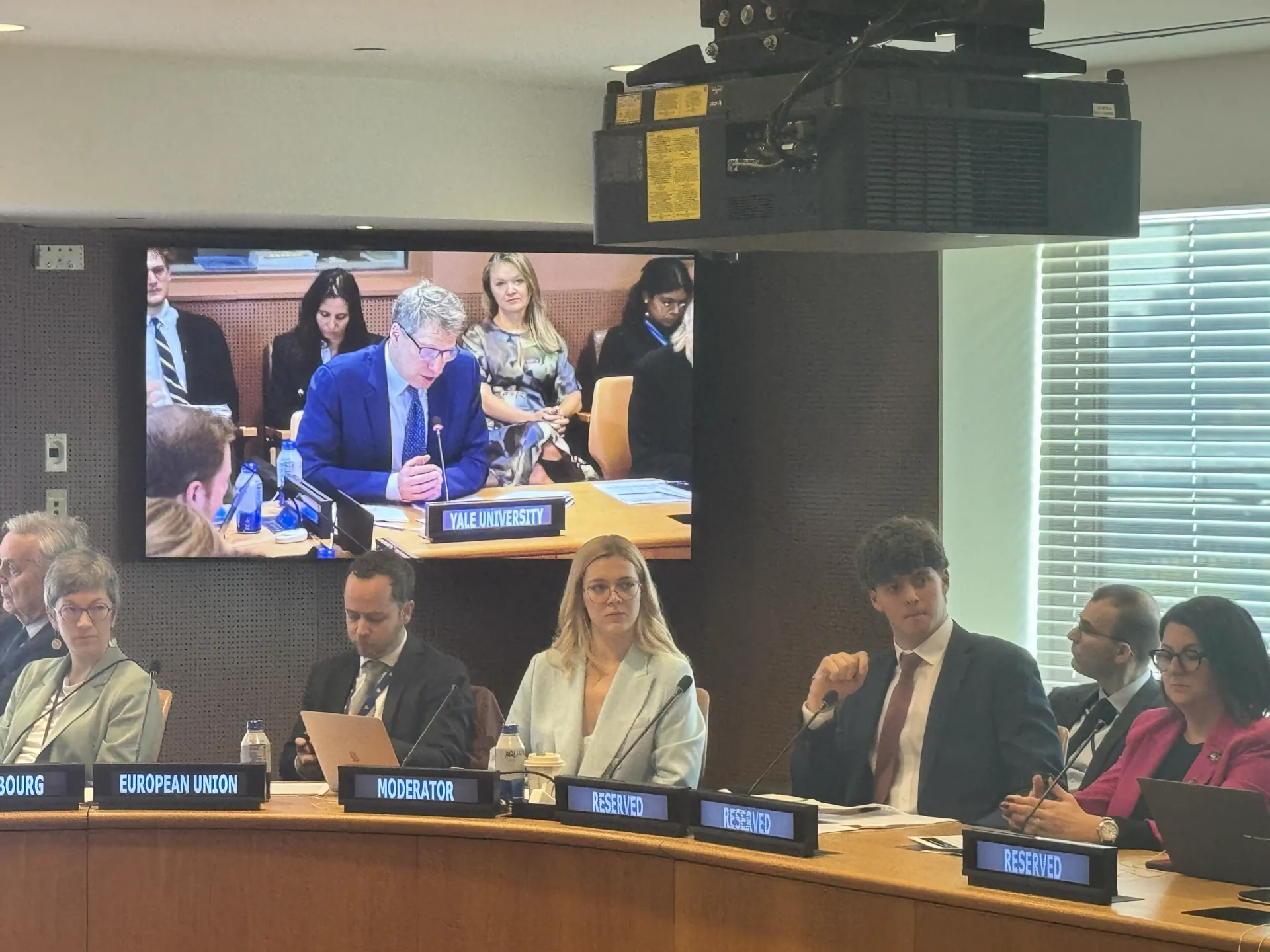
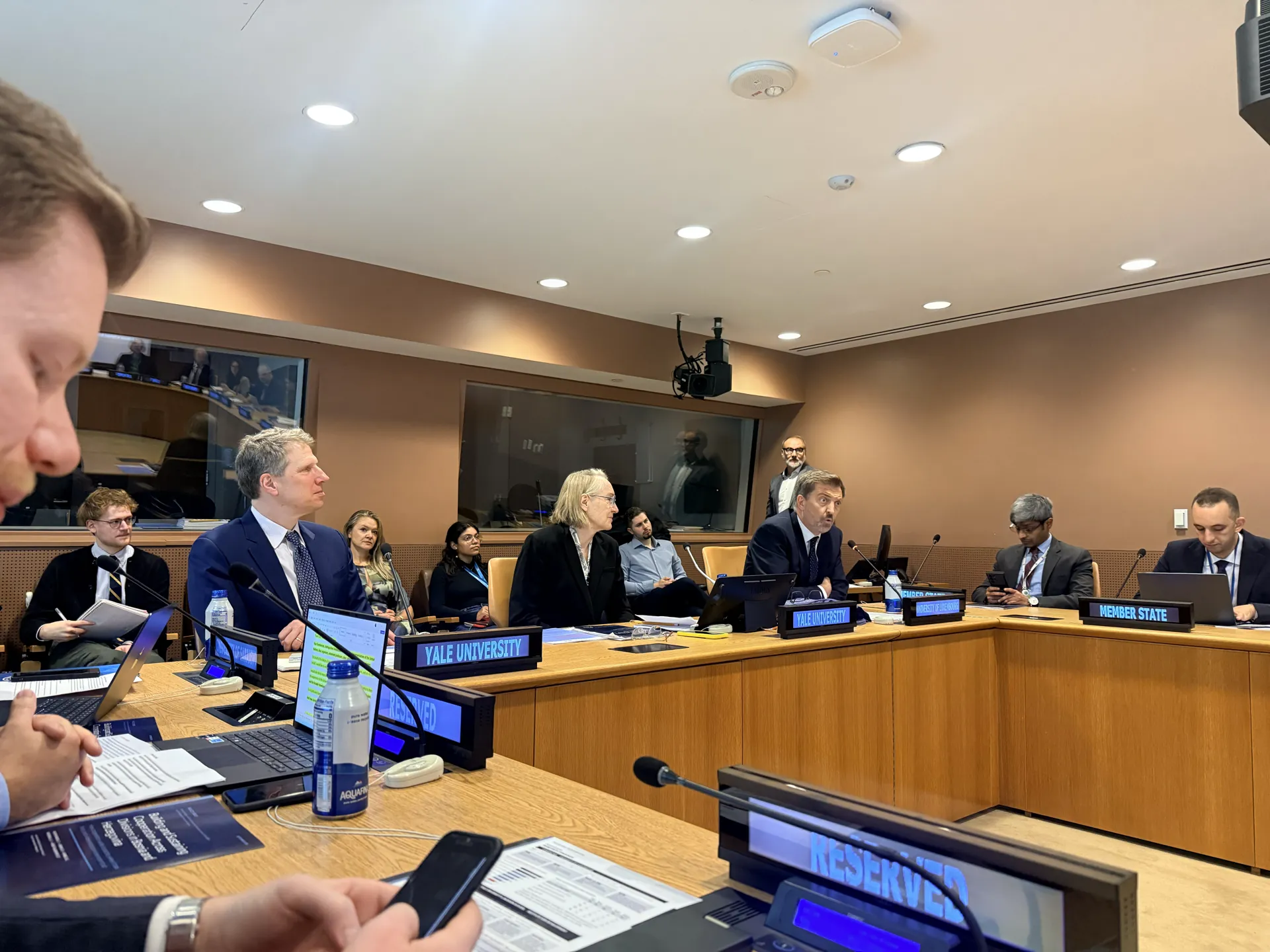
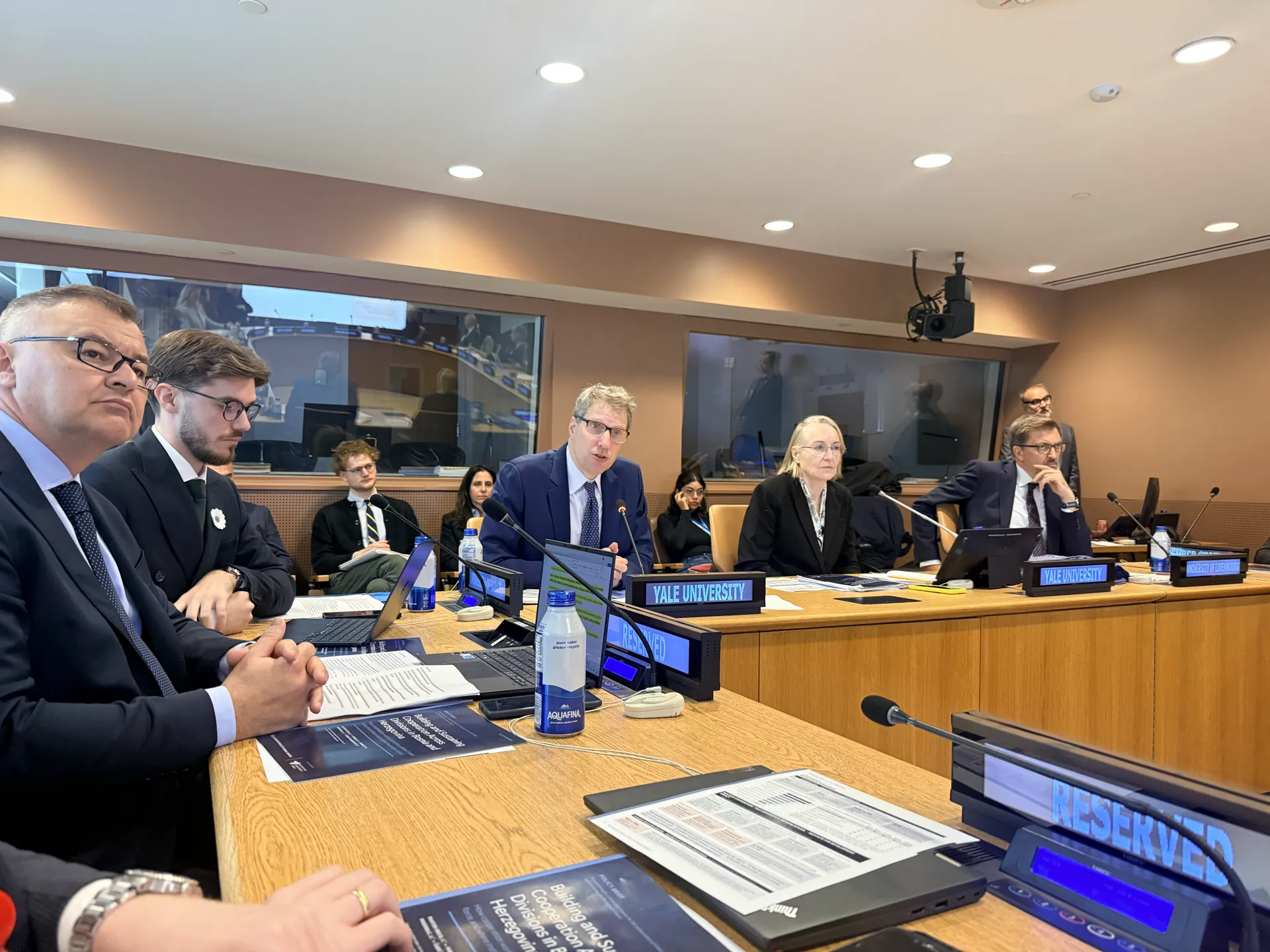
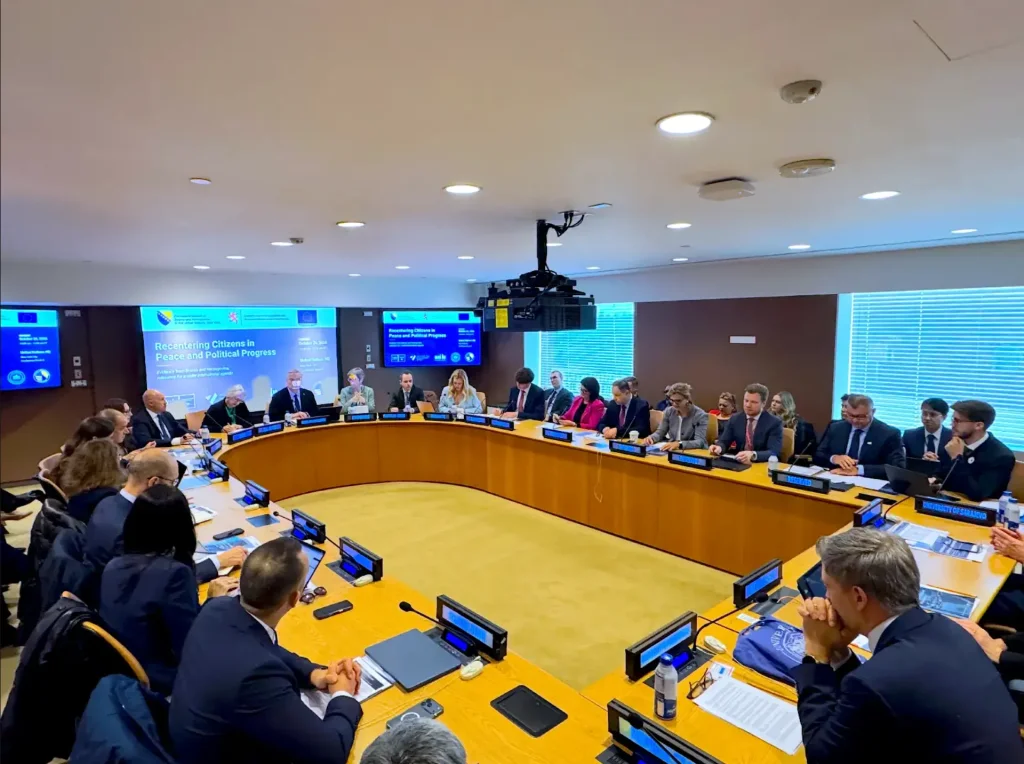
NEW YORK, October 26, 2026 — The Permanent Missions of Bosnia and Herzegovina and Luxembourg and the Delegation of the European Union to the United Nations, in collaboration with the United States-Bosnia and Herzegovina Exchange Council, today convened senior United Nations officials, diplomats, researchers, civil society representatives and youth leaders at United Nations Headquarters to examine what citizen-informed evidence from Bosnia and Herzegovina can contribute to peacebuilding and political progress, in the country and in other divided and post-conflict societies.
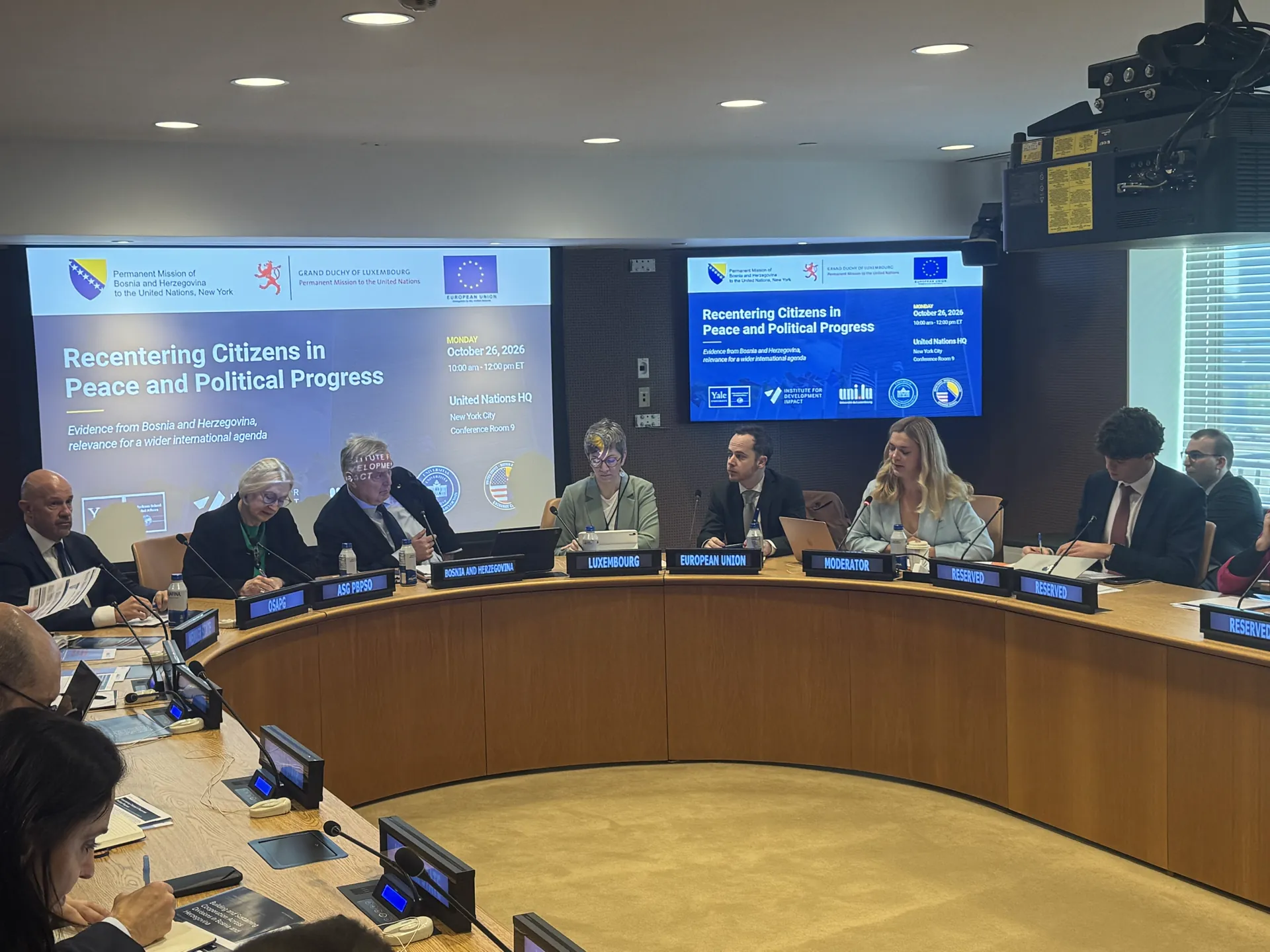
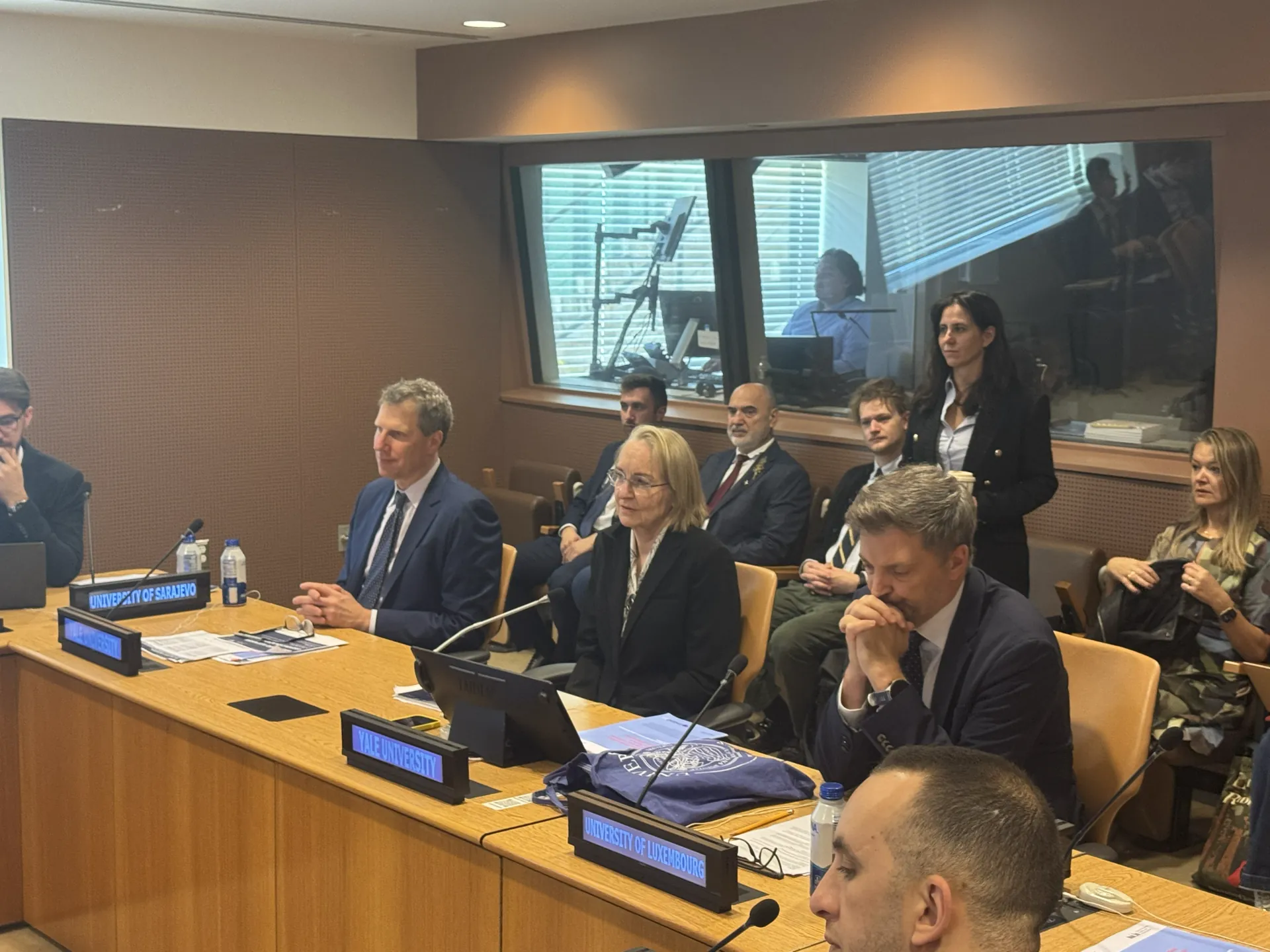
The event, “Recentering Citizens in Peace and Political Progress: Evidence from Bosnia and Herzegovina: Relevance for a Wider International Agenda,” presented two studies completed in 2026 through a research partnership of the Yale Jackson School of Global Affairs, the Institute for Development Impact, the University of Luxembourg and the University of Sarajevo, alongside a student-led peace initiative. Taken together, the findings show that more than thirty years after the Dayton Peace Agreement, citizens agree far more on how public institutions should perform than on how political authority should be organized, and that they cooperate across divisions more often than political and public discourse suggests. Three in four citizens surveyed want courts and prosecutors fully independent of political influence, a view held by at least 72% in every ethnic group.
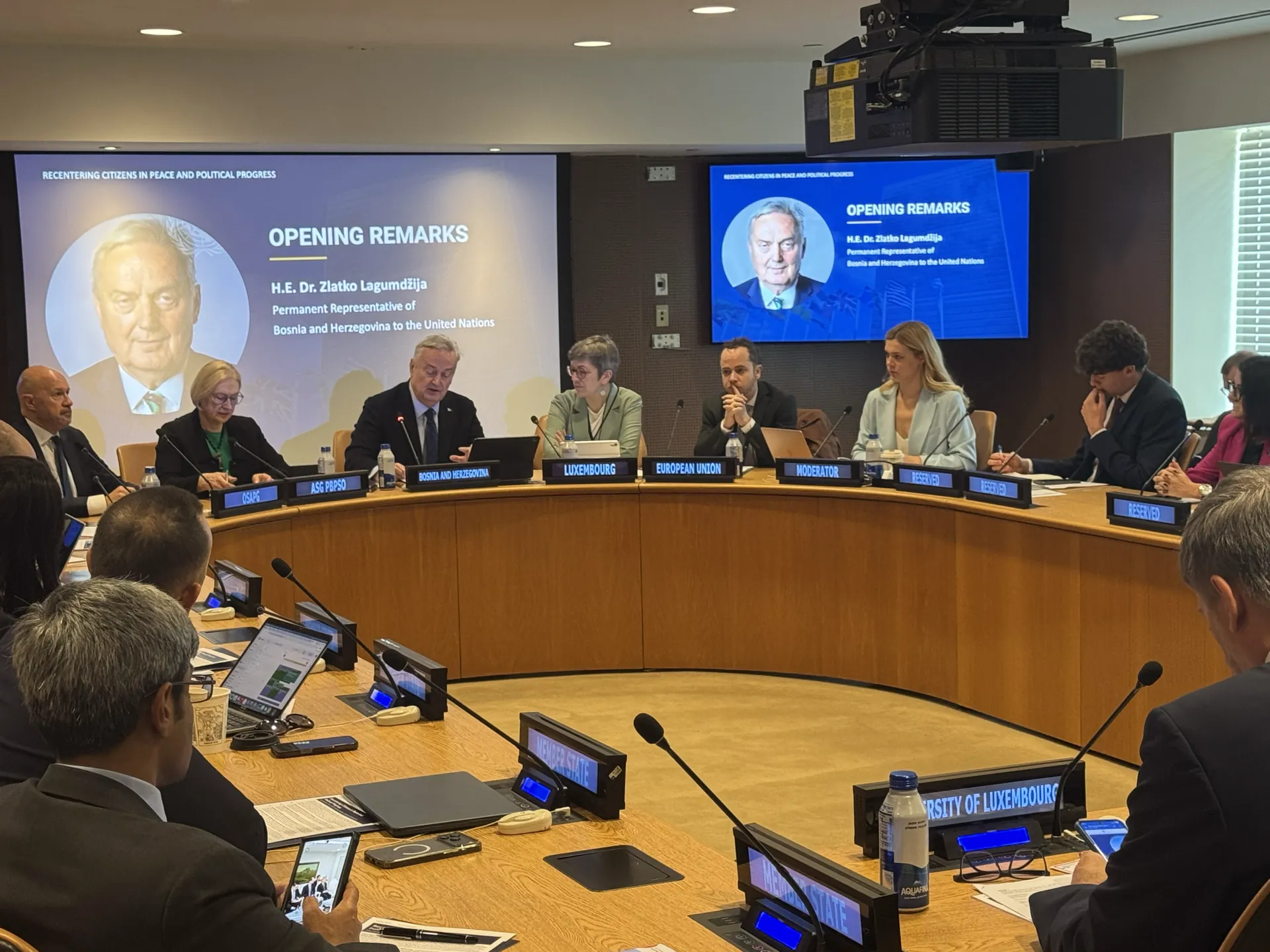
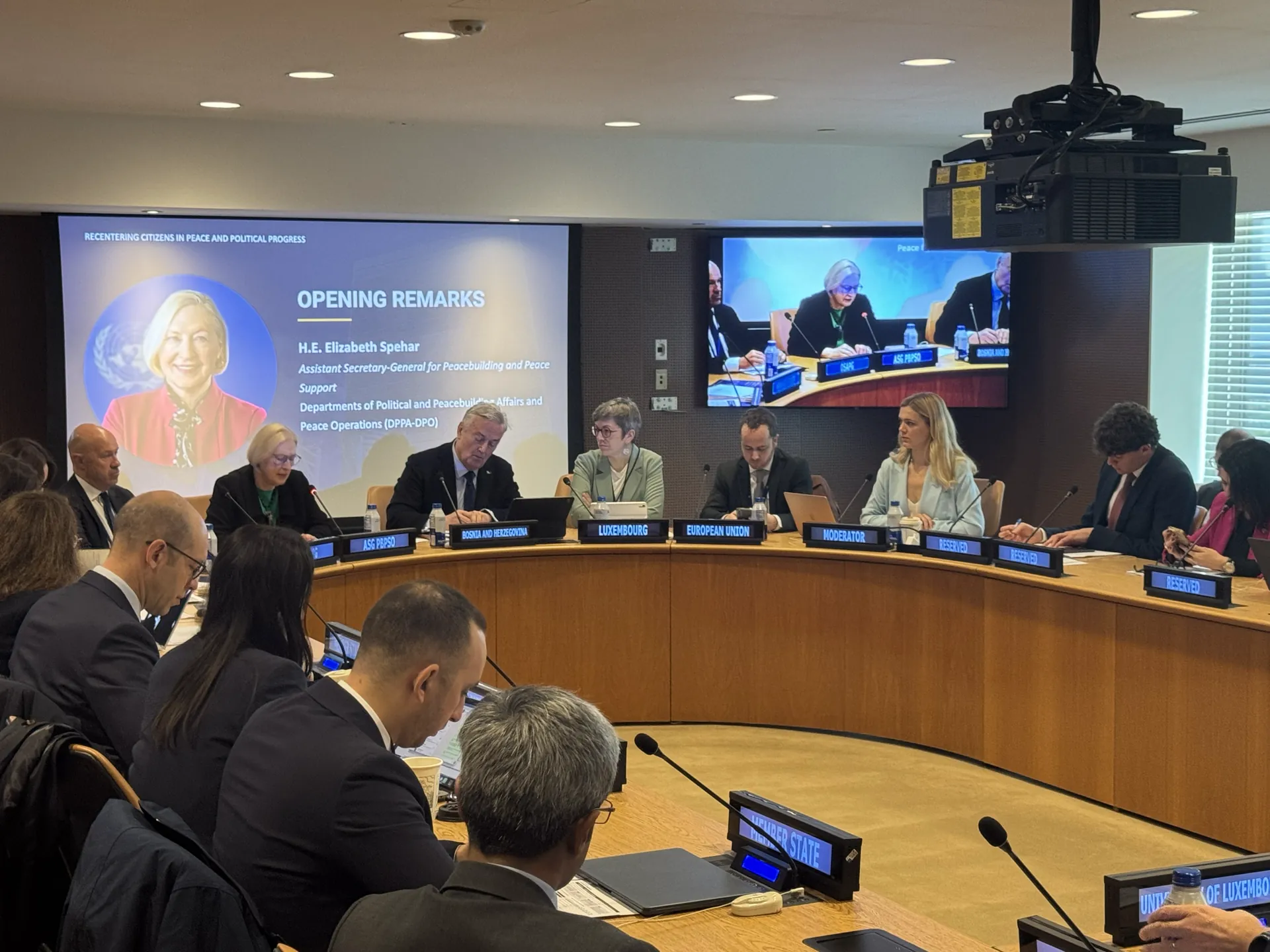
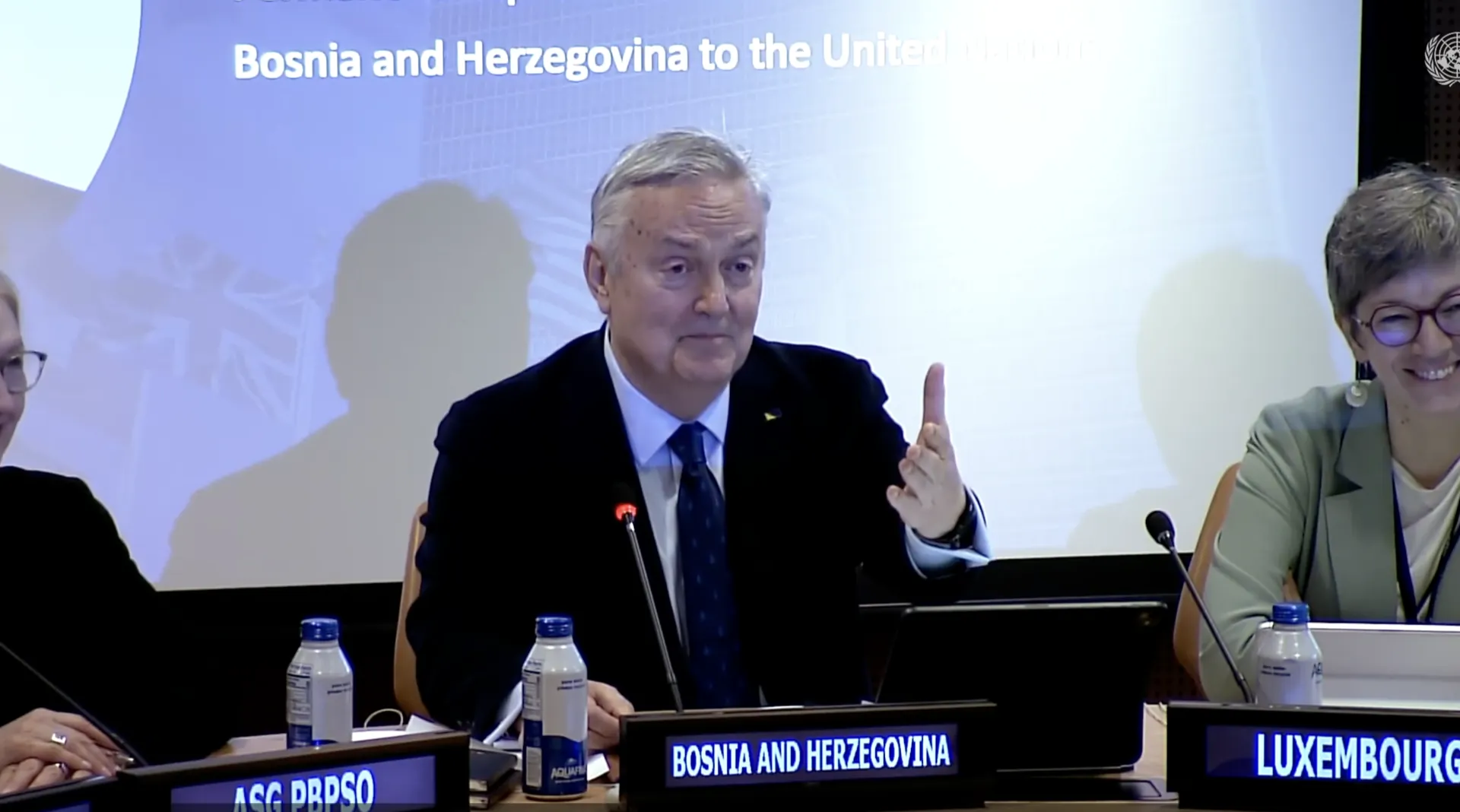
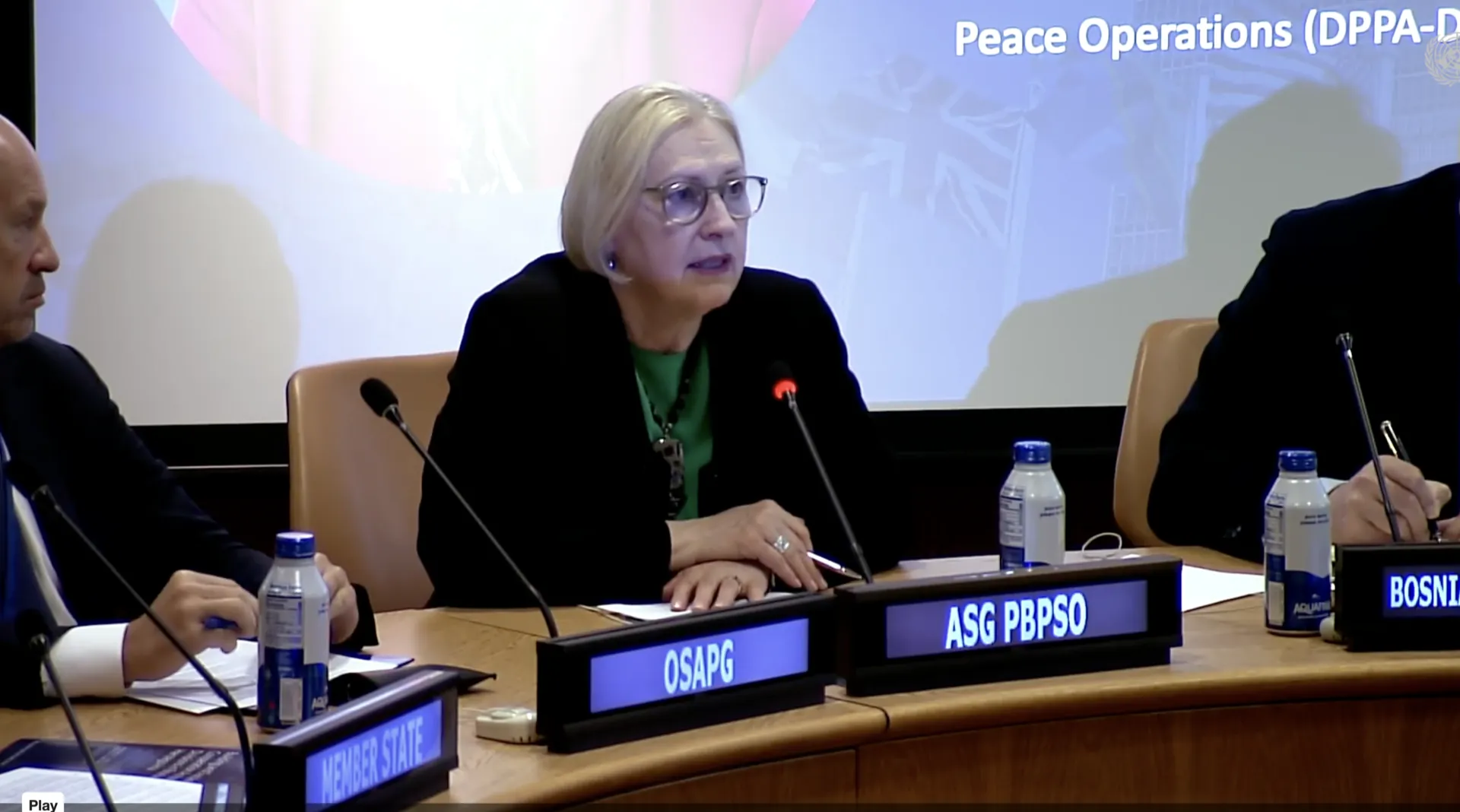
The roundtable heard remarks from H.E. Dr. Zlatko Lagumdžija, Permanent Representative of Bosnia and Herzegovina to the UN; H.E. Ms. Véronique Dockendorf, Permanent Representative of Luxembourg to the UN; Ms. Elizabeth Spehar, UN Assistant Secretary-General for Peacebuilding and Peace Support; Ms. Mô Bleeker, UN Special Adviser on the Responsibility to Protect and Assistant Secretary-General, who joined from Geneva; and the Delegation of the European Union to the UN.
Remarks From the United Nations, Member States and the European Union
Opening the roundtable, Ambassador Lagumdžija described a “dual reality” in Bosnia and Herzegovina, in which pragmatic cooperation on the ground too rarely translates into sustained institutional action. “The central lesson is clear: lasting peace must be built with citizens, not simply for them,” he said, adding that the research confirmed what he had long observed:that cooperation across political and ethno-national divisions is more common in Bosnia and Herzegovina than political discourse might suggest.
Assistant Secretary-General Spehar said that recentering citizens “has never been more critical for the wider international agenda,” and urged partners to protect civic space and to strengthen institutions where citizens first meet the state – at the municipal level. Special Adviser Bleeker, joining from Geneva, said the findings show that citizens “are engaging on a daily basis together to achieve concrete common goals” despite institutional deadlock, and asked whether civil society and government, across ethnic lines, could jointly define a new societal contract for a country that is, thirty years after Dayton, “really at the crossroads.”
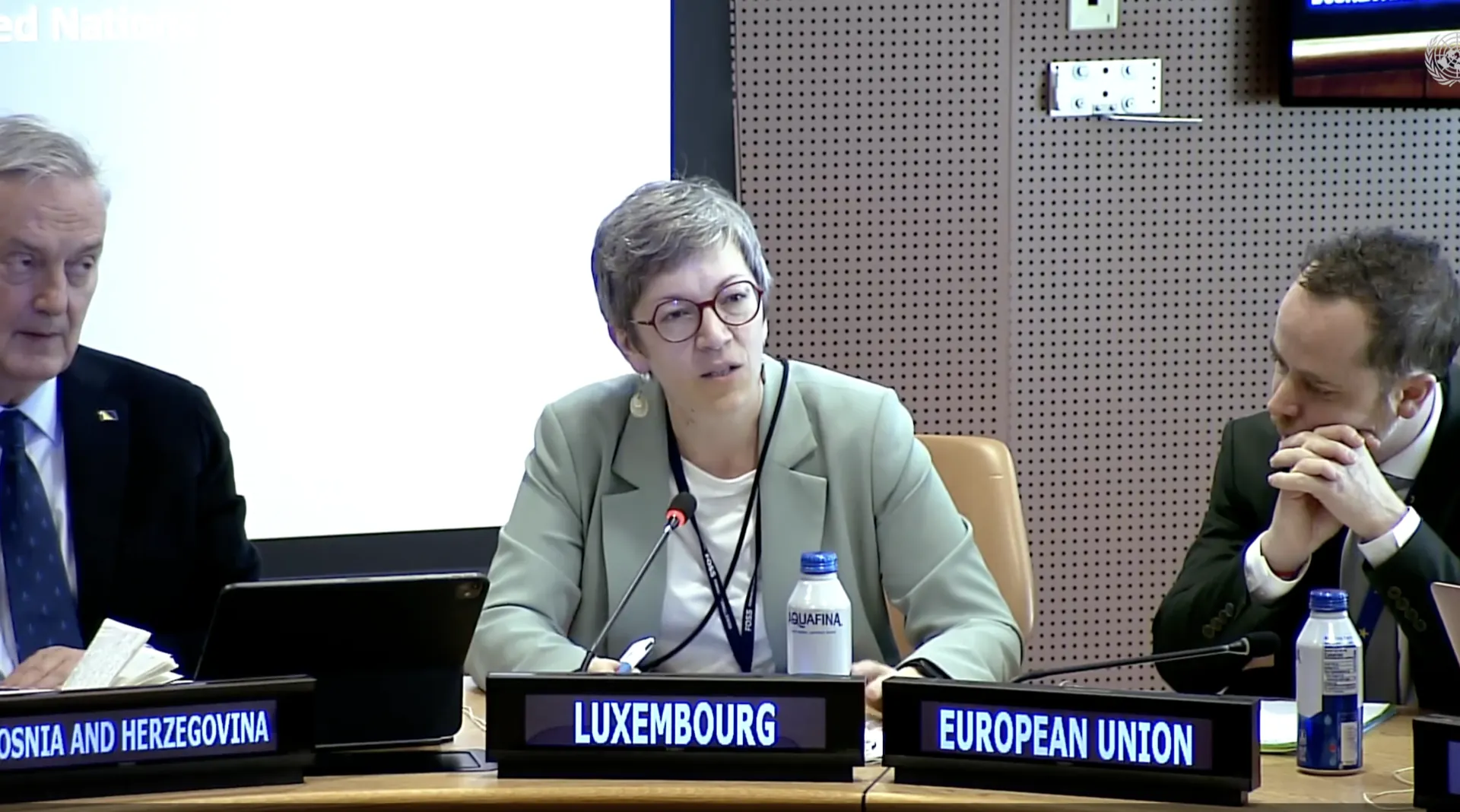
For the Delegation of the European Union, Political Coordinator Quentin Wheeler said that “inclusive institutions are not only a governance objective; they are a peacebuilding imperative.” Closing the event, Ambassador Dockendorf welcomed research that lets diplomats ground their work in evidence rather than politicized narratives. “You have shown us so many avenues of where progress could happen and then be built upon” she said, also highlighting the role of women and youth in peacebuilding.
What the Research Found
Citizens of Bosnia and Herzegovina Share More Common Ground on Constitutional Questions Than Their Politics Suggest
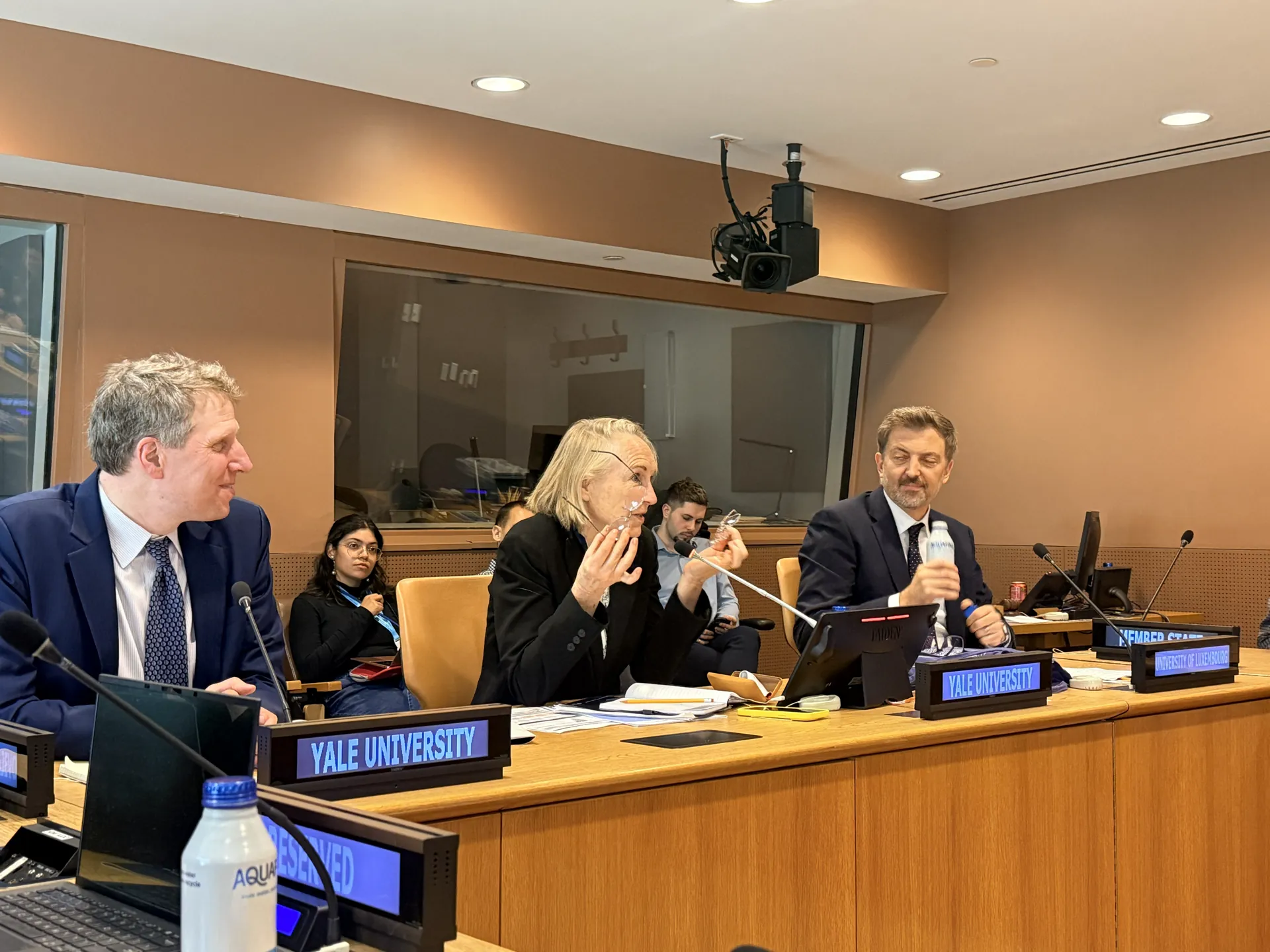
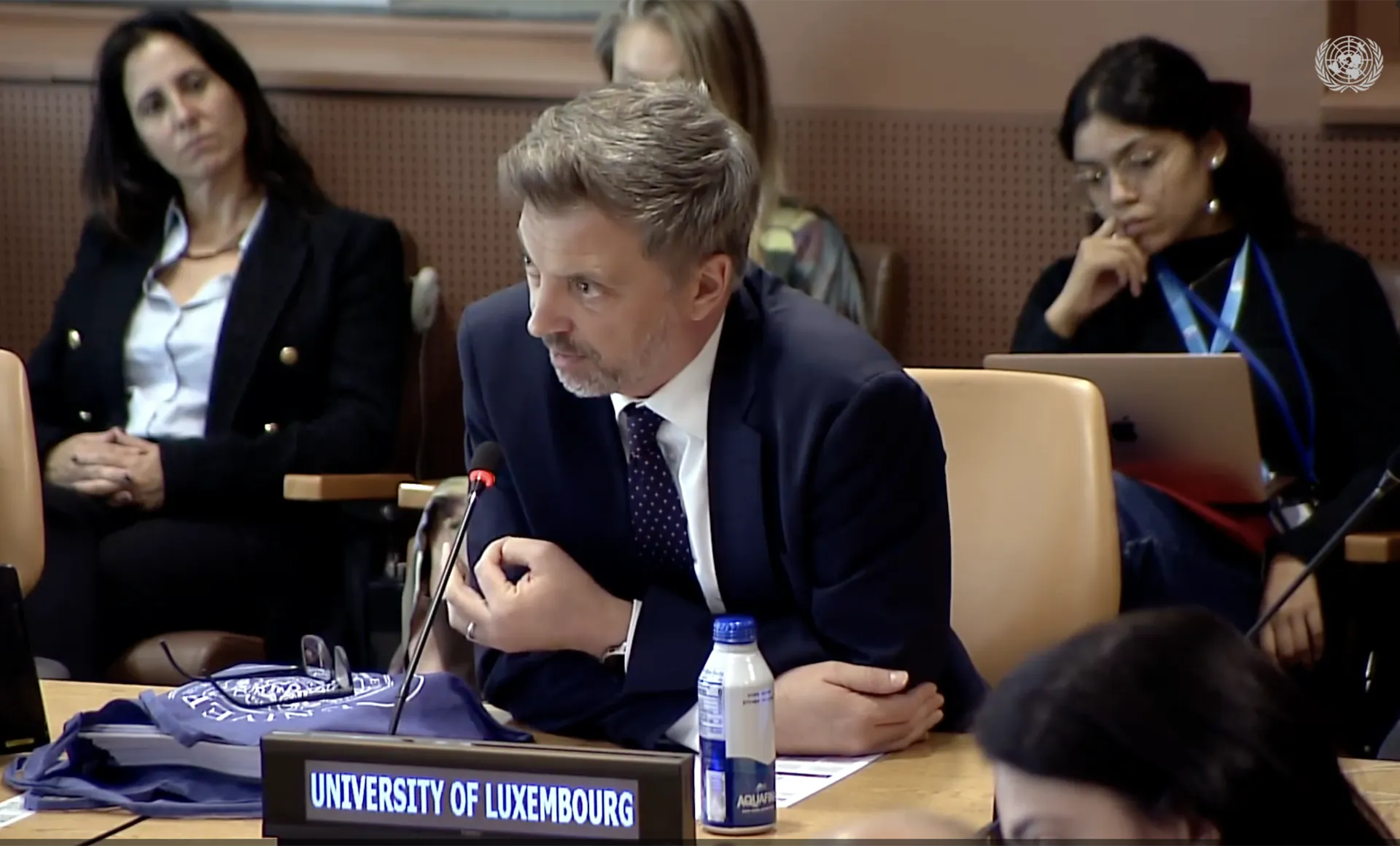
The University of Luxembourg’s CONSENT BiH project began, in the words of Dr. Josip Glaurdić, with “a simple question, which is relevant well beyond Bosnia and Herzegovina: what happens when we stop asking political leaders what their communities want and start asking citizens themselves?” The project runs in four stages, from listening to citizens individually and collectively to testing constitutional compromises and public reactions to the findings; the first two stages were completed in summer 2026.
Interviews and focus groups showed that citizens rarely approach constitutional questions as abstract debates about institutional design. They ask whether the government can make decisions, whether politicians can be held accountable, and whether constitutional safeguards protect communities or merely enable obstruction. A widespread sense of limited political agency was present in every community: people expected a great deal from public institutions but felt they had little influence over how those institutions work.
A survey of more than 2,000 citizens across 18 constitutional questions then found that respondents across ethnic lines held remarkably similar views on nationalism, populism, economic policy and even the Bosnian War. Peace and stability ranked as their top constitutional priority, followed by equal rights, preventing corruption, political accountability and economic well-being, all ahead of ethnic group rights, and judicial independence ranked first among constitutional issues in every ethnic group.
Sharper divisions emerged on who should control institutions: territorial organization, collective representation, secession, military alignment and international oversight. Mapping preferences on eight core constitutional questions, the team found no evidence of three coherent ethno-national sets of preferences. “Ethnic identity can constrain political preferences without determining a single preferred constitutional solution,” Dr. Glaurdić said.
He drew three lessons for international peacebuilding: political elites should not be assumed to represent the full diversity of their communities; shared expectations of fair, accountable and effective institutions offer a foundation for progress even where disagreements over power persist; and citizen participation should not end with consultation. “Recentering citizens does not mean pretending that political divisions have disappeared,” he said. “It does mean refusing to let those divisions define the entirety of what is politically possible.”
Everyday Cooperation Across Divisions Is Already Working in Bosnia and Herzegovina, Yale–I4DI Study Finds
Where the Luxembourg study asks what citizens want from the constitutional order, the joint study by the Yale Jackson School of Global Affairs and the Institute for Development Impact, Building Cooperation Across Divisions, asks how cooperation works in practice and where it loses force. Drawing on interviews with members of the armed forces, the business sector, academia, civil society, the diaspora and officials working on EU accession, it finds that while public debate centers on division, people routinely work, trade, research, and solve problems across political, ethnonational, and generational lines.
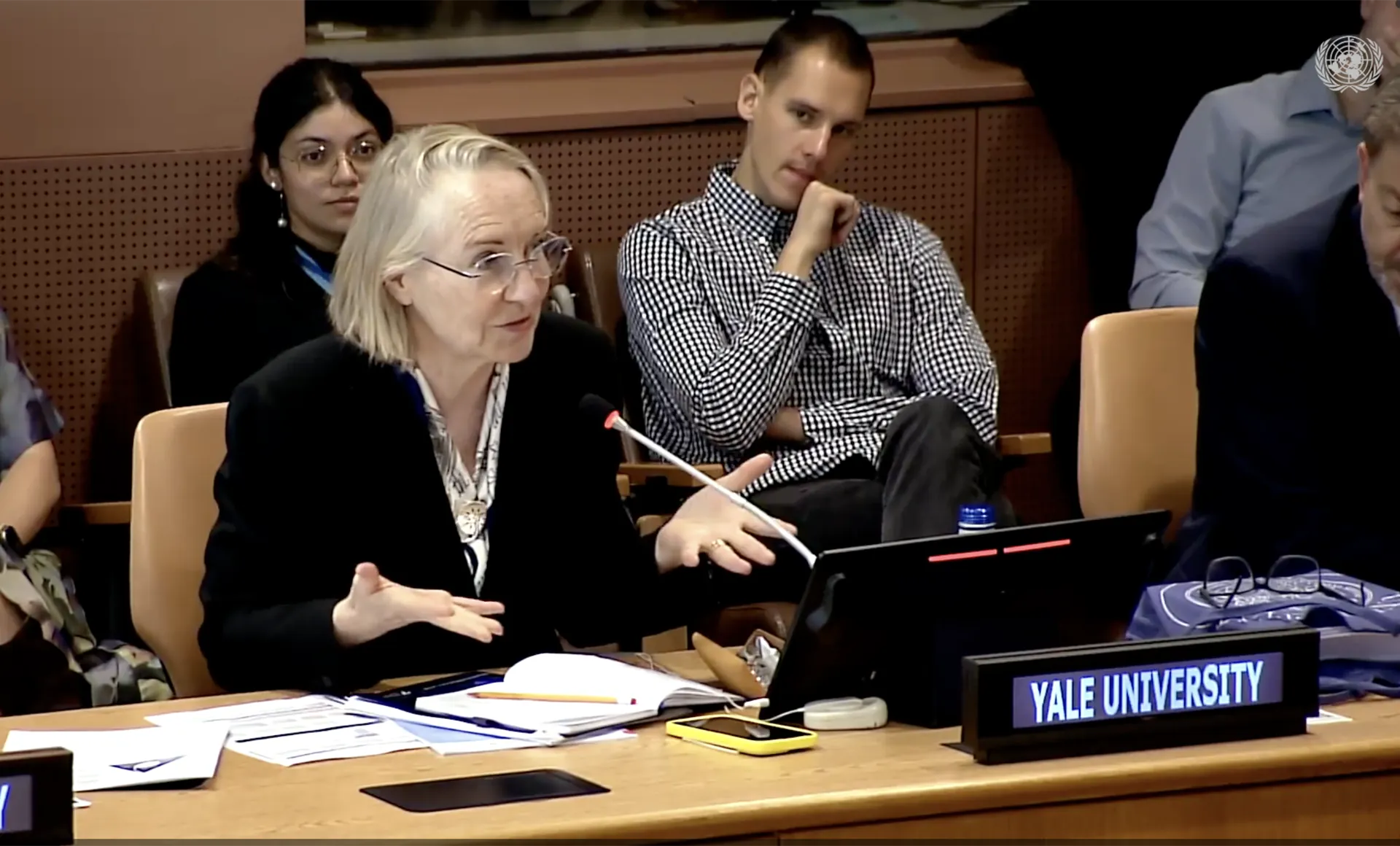
“We find that cooperation across ethnonational divisions is more widespread than public and political debate would suggest,” said Dr. Catherine Panter-Brick of Yale University. “If you retain one fact, it’s the breadth that matters: from these different sectors to understand in each, how does cooperation work in practice; in each, where does it lose force; and above all, where we can act.”
Cooperation lasts when two conditions are present: partners with a clear reason to rely on each other, and the authority and support to carry their work forward. The armed forces combine both, with personnel from across the country serving in one institution under one chain of command and shared professional standards; a senior officer told the researchers that on missions such as demining or flood response, one person’s safety depends on the judgment of the person beside them. In business, firms in Sarajevo and Banja Luka form consortia when they need each other’s expertise; as one participant put it, cooperation becomes surprisingly easy when people have a serious project in front of them. Two reforms show why authority matters as much as reliance: the 2005 defense reform created a single chain of command and made cooperation routine, while police restructuring, which required moving legislative and budgetary control to the state level, stalled without agreement and delayed the country’s first formal agreement with the European Union.
Dr. David Simon described cooperation in academia and civil society, including youth clubs in Brčko that, with international support, institutionalized themselves and contributed to a law on local communities. He also pointed to a diaspora of more than two million people, roughly two-thirds the size of the population in the country, ready to help but often lacking recognition or an institutional interface.
Cooperation loses force when political backing shifts, when external decisions block progress, as when EU accession stumbled and over €100 million in growth plan support was withdrawn, and when institutional knowledge fades. The researchers argue there is room to act within existing authority by recognizing where cooperation already works, protecting the space for it when it is blocked, and engaging the diaspora. They caution that veto holders who reject pluralism should not determine the country’s future simply because they hold access to power and media. “Cooperation craves continuity,” Dr. Simon said. “It falters when it’s blocked. It falters when it is neglected.”
A Commitment Carried by the Next Generation
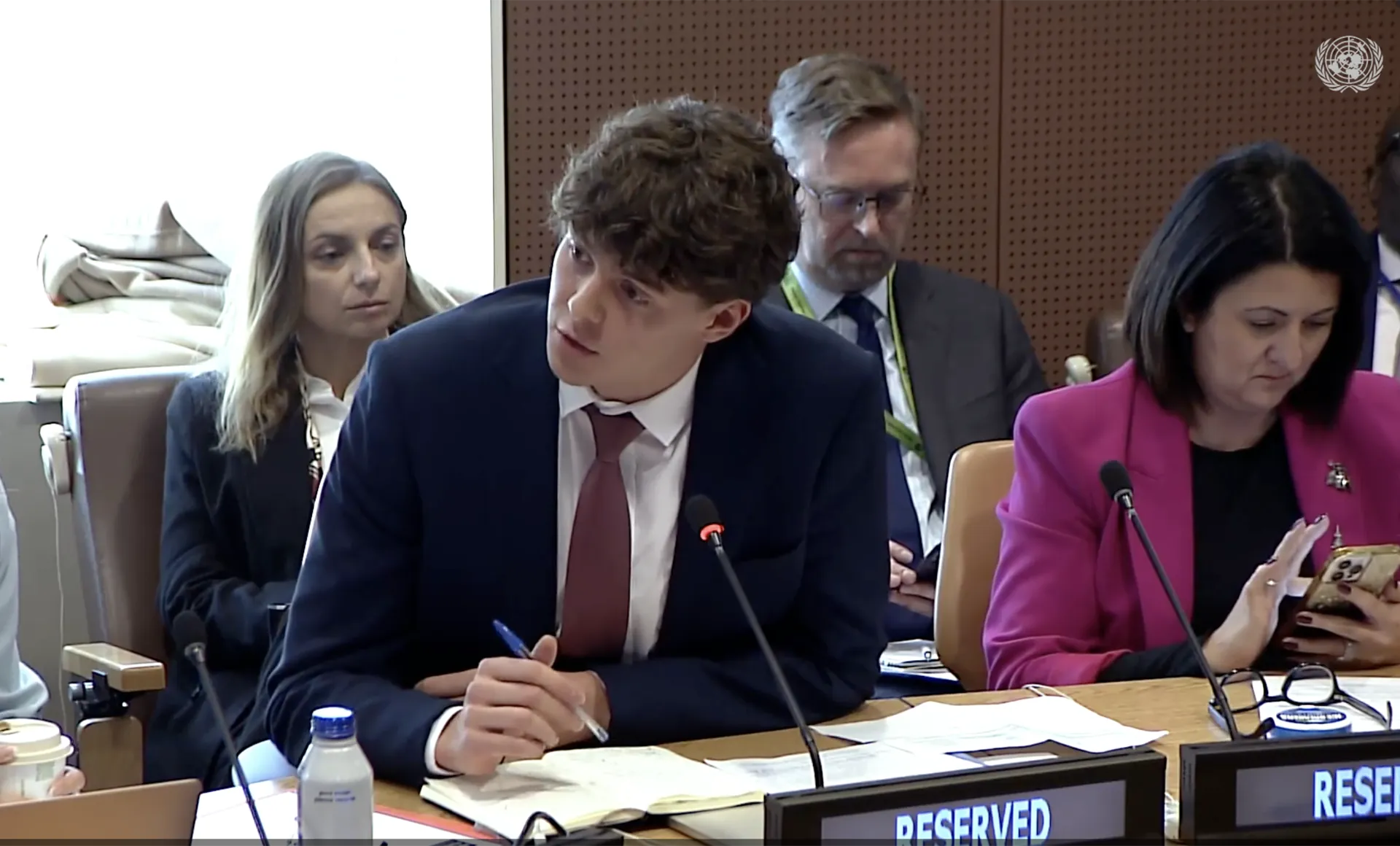
Mr. Imran Pašalić, former President of the Students’ Parliament of the University of Sarajevo, presented the Students’ Peace Declaration, led by University of Sarajevo students with the EUPeace Alliance. The idea began with bringing together student representatives from all eight public universities in Bosnia and Herzegovina, across both entities. The Declaration was launched in Sarajevo on 17 September 2025, when representatives of 103 institutions, including major public universities in Bosnia and Herzegovina, signed it at the Parliamentary Assembly of Bosnia and Herzegovina. Within a year the number of signatories had grown to more than 156 across Europe.
The Declaration commits signatories to peace, social justice, democratic values, intercultural dialogue and academic cooperation. It treats universities as spaces where dialogue, civic responsibility, and a culture of peace are cultivated. While there is an absence of systematic monitoring of what signatories have done and of a recurring country-wide program, annual gatherings are planned to assemble the signatories, analyze progress, adopt common priorities, and act through projects and advocacy. The concrete target is a joint student activity across Bosnia and Herzegovina by spring 2027.
“Students are not citizens in waiting. They are citizens now,” Mr. Pašalić said. “And peace is not inherited. It is learned, practiced, and handed forward.”
The roundtable was moderated by Ms. Andrea Pozderac of the Institute for Development Impact and Mr. Mak Nurkić, Yale University Peacebuilding Fellow at the Jackson School of Global Affairs.
Watch the full roundtable on UN Web TV:
Sources
- Panter-Brick, C., Simon, D., Nurkić, M., Pozderac, A., & Šabić-Hamidović, D. (2026). Building and Sustaining Cooperation Across Divisions in Bosnia and Herzegovina. Policy Paper. Jackson School of Global Affairs, Yale University, and Institute for Development Impact. Link: https://jackson.yale.edu/peacebuilding-initiative/research-policy-briefs
- Muharemović, E., Džepina, M., & Glaurdić, J. (2026). From Lived Experience to Constitutional Preferences: How Citizens Understand Reform in Bosnia and Herzegovina. CONSENT BiH Research Note 1, University of Luxembourg. Link: https://www.uni.lu/fhse-en/research-projects/consent-bih/results/
- Glaurdić, J., Lesschaeve, C., Muharemović, E., & Džepina, M. (2026). Bounded Accommodation. CONSENT BiH Research Note 2, University of Luxembourg, August 2026. Link: https://www.uni.lu/fhse-en/research-projects/consent-bih/results/
- EUPeace. “One Year of the Students’ Peace Declaration,” September 21, 2026. Link: https://www.eupeace.eu/one-year-of-the-students-peace-declaration-from-sarajevo-to-a-growing-european-commitment-to-peace/
- United Nations Web TV. “Recentering Citizens in Peace and Political Progress,” October 26, 2026. Link: https://webtv.un.org/en/asset/k14/k149nqkuxz